
Can Powder-Coated Parts Be Reworked?
Yes. Defective powder-coated parts can often be reworked, but the correct method depends on the defect, coating system, substrate, part geometry, service environment, and customer specification.
For critical applications or widespread defects, the most reliable approach is usually to remove the existing coating completely, restore the required surface pretreatment, and process the part again as though it were new. Applying another coat over an existing film may be technically possible in selected cases, but only after compatibility and adhesion have been verified. It should not be treated as a universal shortcut.
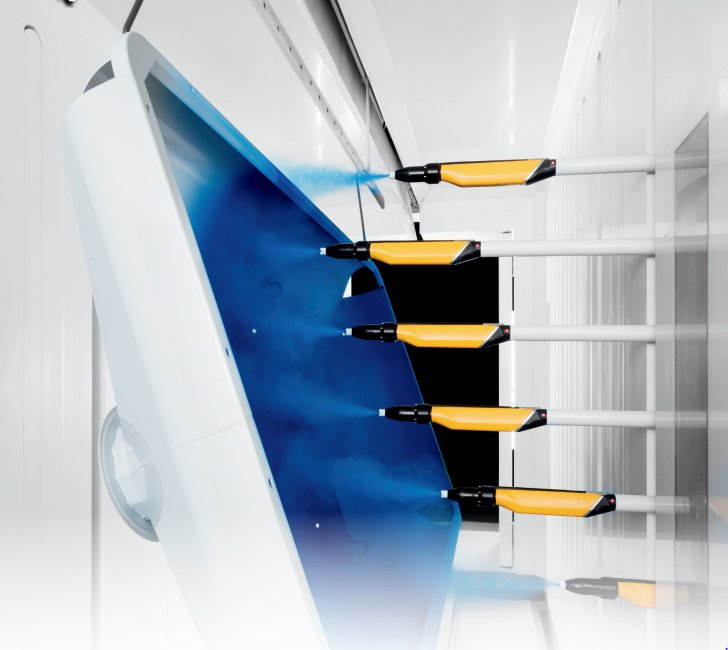
Standard Powder Coating Rework Process
1. Identify the Defect and Its Root Cause
Before reworking the part, determine why the original coating failed. Common causes include inadequate pretreatment, oil or moisture contamination, poor grounding, incorrect film thickness, insufficient or excessive cure, outgassing, and powder contamination.
If the root cause is not corrected, the same defect may reappear after recoating.
2. Decide Whether Full Stripping Is Required
Complete coating removal is generally recommended when:
the original film has poor adhesion;
the substrate or pretreatment is contaminated;
corrosion is present beneath the coating;
the coating is blistered, cracked, severely undercured, or extensively damaged;
dimensional tolerances do not allow additional film build;
appearance or performance specifications are demanding; or
the compatibility of the existing and new coating systems is unknown.
Localized repair or direct recoating may be considered for minor cosmetic defects only when the original coating is sound, clean, sufficiently cured, and compatible with the repair coating. The surface normally requires cleaning and controlled abrasion to create a suitable mechanical key. A representative test panel or sample part should be approved before production rework begins.
3. Remove the Existing Coating When Necessary
The old coating must be removed without causing unacceptable damage, distortion, dimensional change, or chemical contamination to the substrate. The appropriate stripping method should be selected according to the substrate, coating chemistry, component thickness, geometry, and production volume.
4. Repeat the Required Surface Pretreatment
After stripping, treat the component to the same approved standard used for a new part. Depending on the substrate and specification, this may include:
cleaning and degreasing;
rinsing;
rust or oxide removal;
phosphating or an appropriate conversion coating;
final rinsing, including deionized-water rinsing where specified; and
thorough drying before coating.
Any stripping chemicals, ash, corrosion products, abrasive dust, oil, and moisture must be removed. Surface preparation is one of the most important factors affecting adhesion and corrosion resistance.
5. Reapply and Cure the Powder Coating
Apply the powder under the approved spraying conditions and control the total film thickness carefully. Cure according to the powder supplier’s schedule, based on the actual metal temperature and time at temperature—not only the oven air setting.
6. Inspect and Test the Reworked Part
Inspection requirements should match the product specification and end-use risk. Typical checks may include:
visual appearance and color;
dry film thickness;
cure verification;
adhesion;
impact resistance or flexibility, where applicable; and
corrosion testing, where required by the relevant specification.
When stripping, pretreatment, application, and cure are properly controlled, a reworked part may achieve performance comparable to a correctly coated new part. This should be confirmed by testing rather than assumed.
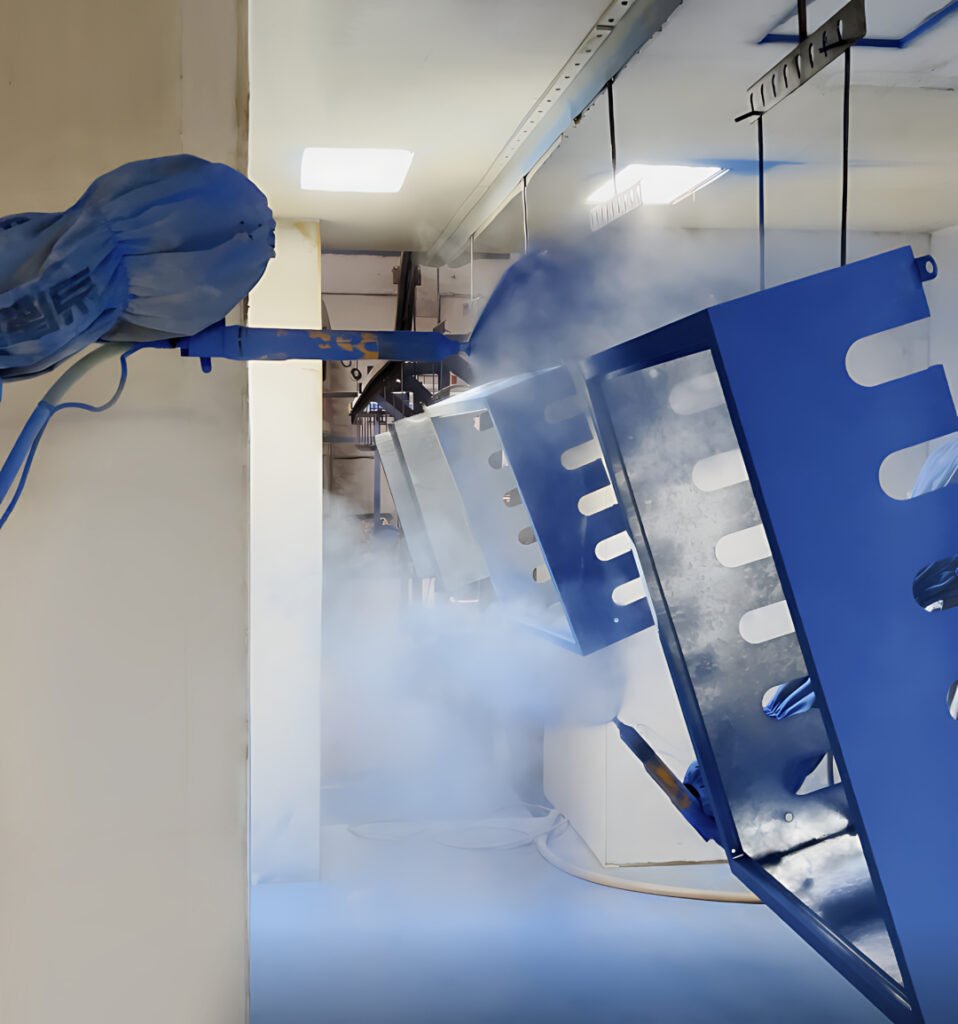
Common Powder Coating Rework Mistakes
Mistake 1: Recoating Directly Over a Defective Film
Applying fresh powder over a defective coating can conceal the problem temporarily without correcting it. If the original film has weak adhesion, contamination, undercure, corrosion, or structural damage, the additional layer will not restore the integrity of the coating system. Premature peeling, blistering, cracking, or delamination may follow.
Direct recoating is acceptable only when the existing film is sound and the coating systems are compatible. Cleaning, surface abrasion, film-build control, and trial validation are essential.
Mistake 2: Incomplete Coating Removal
Residual coating in corners, recesses, welds, and other difficult areas can interfere with subsequent pretreatment and produce an uneven surface. Depending on the condition of the residue and substrate, defects may include poor adhesion, pinholes, blistering, craters, visible edges, and localized delamination.
The acceptance criterion should be defined by the process specification. Where full stripping is required, the inspected surface must be free of visible coating residue and contaminants before pretreatment begins.
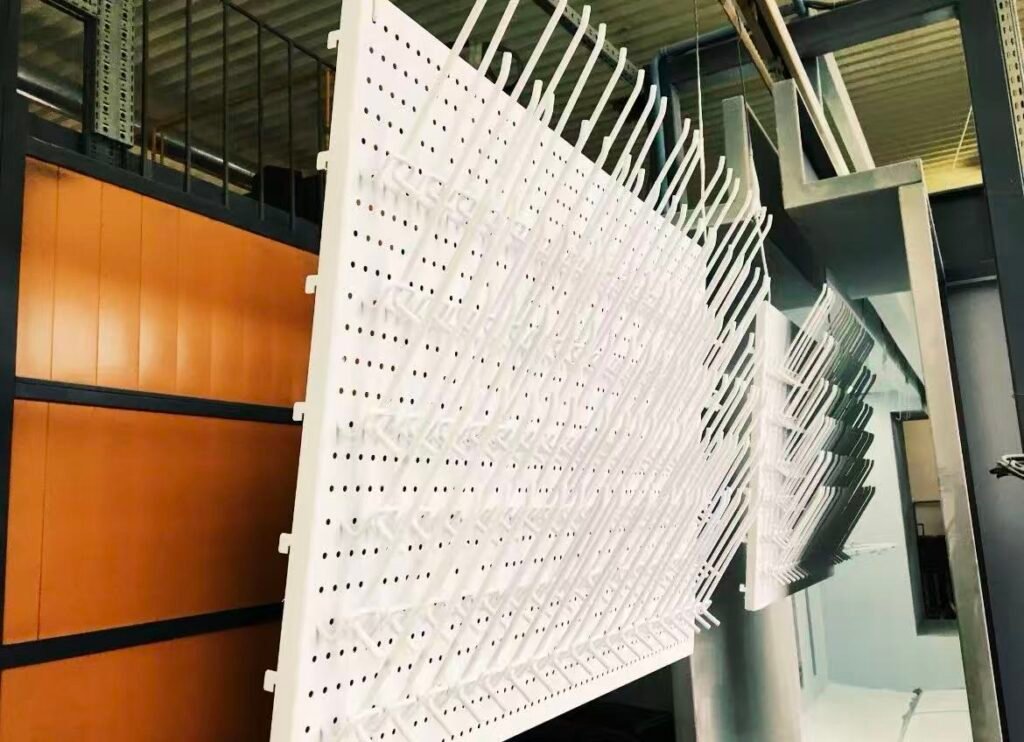
Three Common Powder Coating Removal Methods
1. Chemical Stripping
Chemical stripping can remove coating from complex shapes, recesses, and areas that are difficult to reach mechanically. It can also be efficient for batch processing.
Key controls include chemical selection, bath concentration, temperature, immersion time, substrate compatibility, rinsing, neutralization where required, waste treatment, and worker safety. Inappropriate chemistry or excessive exposure can attack aluminum, zinc-coated steel, or other sensitive substrates. No stripping-agent residue should remain before pretreatment.
2. Thermal Stripping
Thermal stripping—such as a controlled burn-off or pyrolysis process—is often used for robust steel components, hooks, racks, and parts that can tolerate elevated temperatures.
It may be unsuitable for thin sheet metal, heat-treated alloys, assemblies, or dimensionally sensitive components because excessive heat can cause distortion or alter material properties. The process can leave ash and oxide scale, which must be removed by an appropriate mechanical cleaning method before pretreatment and recoating.
Open or uncontrolled burning should not be used. Thermal stripping must be performed with suitable process and emission controls.
3. Mechanical Stripping or Abrasive Blasting
Grinding, sanding, and abrasive blasting can be effective for accessible surfaces and structurally robust parts. Abrasive blasting can remove coating and corrosion while also producing a surface profile suitable for subsequent coating when correctly specified.
However, aggressive blasting may distort thin material or alter surface roughness and dimensions. Manual sanding is also less effective in recesses, internal corners, and complex geometries. The abrasive type, particle size, pressure, cleanliness, and resulting surface profile must therefore be controlled.
Additional Factors to Consider Before Rework
Substrate Condition and Part Geometry
Thin-gauge sheet metal, precision components, heat-sensitive alloys, galvanized surfaces, and complex assemblies may be damaged by aggressive stripping. Always verify substrate compatibility before selecting a removal process.
Dimensional Tolerance and Total Film Build
Additional coating thickness can affect threads, holes, mating surfaces, grounding points, and assembly tolerances. These areas may require masking or complete stripping rather than another coating layer.
Rework Cost
Rework is not automatically less expensive than replacement. Before processing a batch, compare the costs of sorting, stripping, pretreatment, recoating, testing, labor, energy, waste disposal, production delays, and potential quality claims.
Customer and Specification Approval
Some automotive, architectural, electrical, food-contact, and other controlled applications restrict or prohibit rework. Review the applicable specification and obtain customer approval when required.
What If Complete Stripping Is Not Available On-Site?
Do not automatically apply standard powder over defective parts. First, ask the powder coating supplier to evaluate the existing coating, defect type, substrate, required appearance, and service conditions.
In some cases, a compatible recoat system or adjusted formulation may improve intercoat adhesion and appearance. However, no formulation can compensate for a loose, contaminated, corroded, or poorly adhered underlying film. Laboratory checks and production trials should be completed before batch rework, followed by the required performance tests.
Conclusion
Successful powder coating rework is a controlled manufacturing process—not simply a second pass through the spray booth. The safest route for major or uncertain defects is to identify the root cause, remove the failed coating completely, restore the specified pretreatment, reapply the powder, cure it correctly, and verify the result.
Careful rework at the factory is far less costly than field failure, rejected shipments, or customer claims.
If you need technical support for a powder coating defect, send us details of the substrate, pretreatment, powder type, curing conditions, film thickness, defect images, and end-use requirements. RIVERS develops standard and customized powder coating solutions for industrial applications and can support sample evaluation and production trials.